
Why Criterix exists
Criterix takes medication safety seriously. Problems are evaluated and solutions are created by the people who are actually watching the errors occur in real time.
Criterix recognizes that all-tech and all-paper healthcare environments both leave gaps, and that those gaps close when humans, paper and tech work together. Sometimes a high-tech problem is solved with a low-tech answer, and vice versa. That insight led to the development of a paper book that works as an adjunct to, rather than a replacement for, the electronic records that have become a vital pillar of the healthcare system.
The same founding principle of the Criterix AI clinical support tool, that all data should be easily traced to the source, is the premise behind the Criterix medication index book, What I Take, and Why.
Medication safety, built by the people who watch the errors happen.
Tools that keep patient information traceable to its source, so an error is found early, during the reconciliation process, rather than after the onset of potentially irreversible consequences.
Where medications fall through the care gap, Criterix builds a bridge.
Anyone who has strung up holiday lights wired in series knows the frustration: one bad bulb and the whole string goes dark.
Parallel wiring took over because when one bulb fails, it is the only one that goes out. You can see exactly where the problem is.
Medication errors work the same way. In a series system, one mistake follows the patient from the moment it is made until the consequences are obvious, sometimes months later, and clinicians have to dig back through months of documentation to find where it started. Criterix products, high-tech and low-tech alike, are built like a parallel circuit. Every piece of information is traceable to its source, so an error can be caught at the next point of care and traced back to where it began, instead of being carried forward.
Which patient chart would you rather troubleshoot?
Each bulb is one transcription in the EMR. Without the book, finding a dropped medication means searching every note in the chart. With it, you can see exactly which bulb went out.
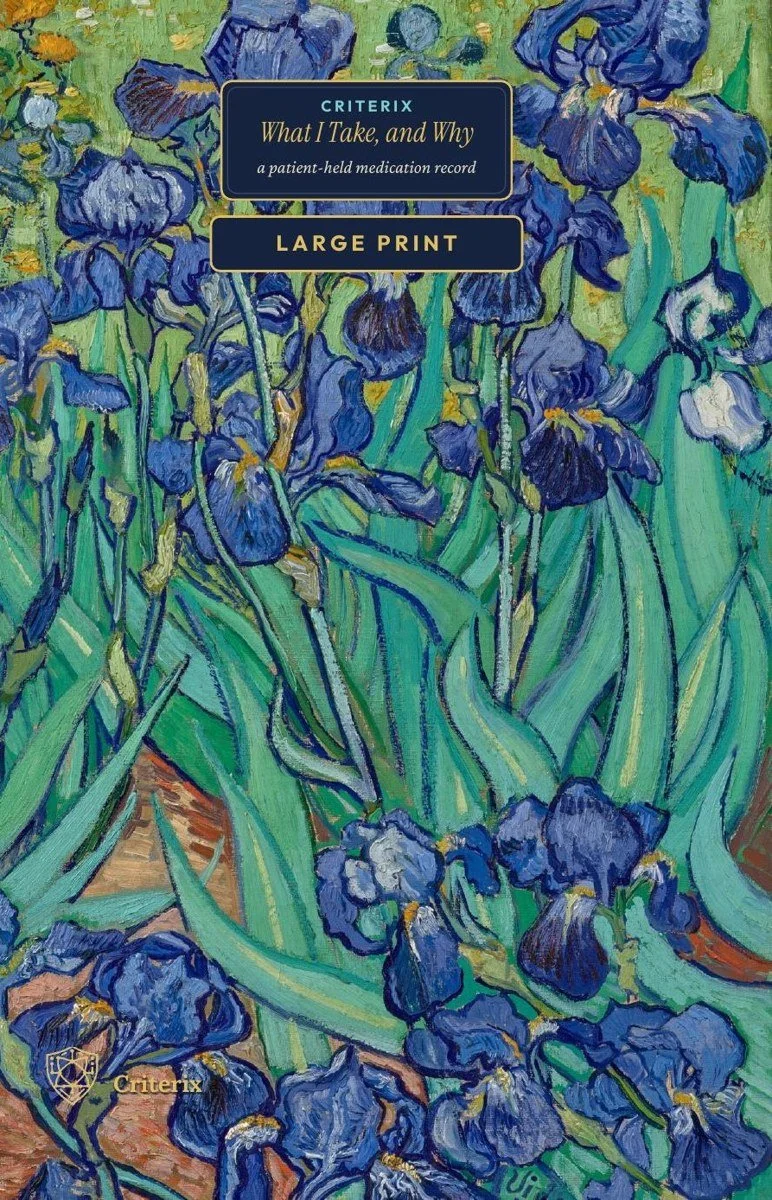
What I Take, and Why
Large Print and Pocket Editions
Eliminates medication name and dose transcription errors by eliminating transcription.
Your medication information travels from your prescriber, to your pharmacy, to this book, with no one copying it by hand along the way.
Three different people, three different problems, three different plans.
Open each case in order: the note that comes in, the options Criterix ranks, and the note the prescriber reviews and signs.
Case 1: A fictional 54-year-old man with treatment-refractory schizophrenia
Case 2: A fictional older adult with a prolonged QTc and acute agitation
Case 3: A fictional adult with an active infection and new acute agitation
WRITING
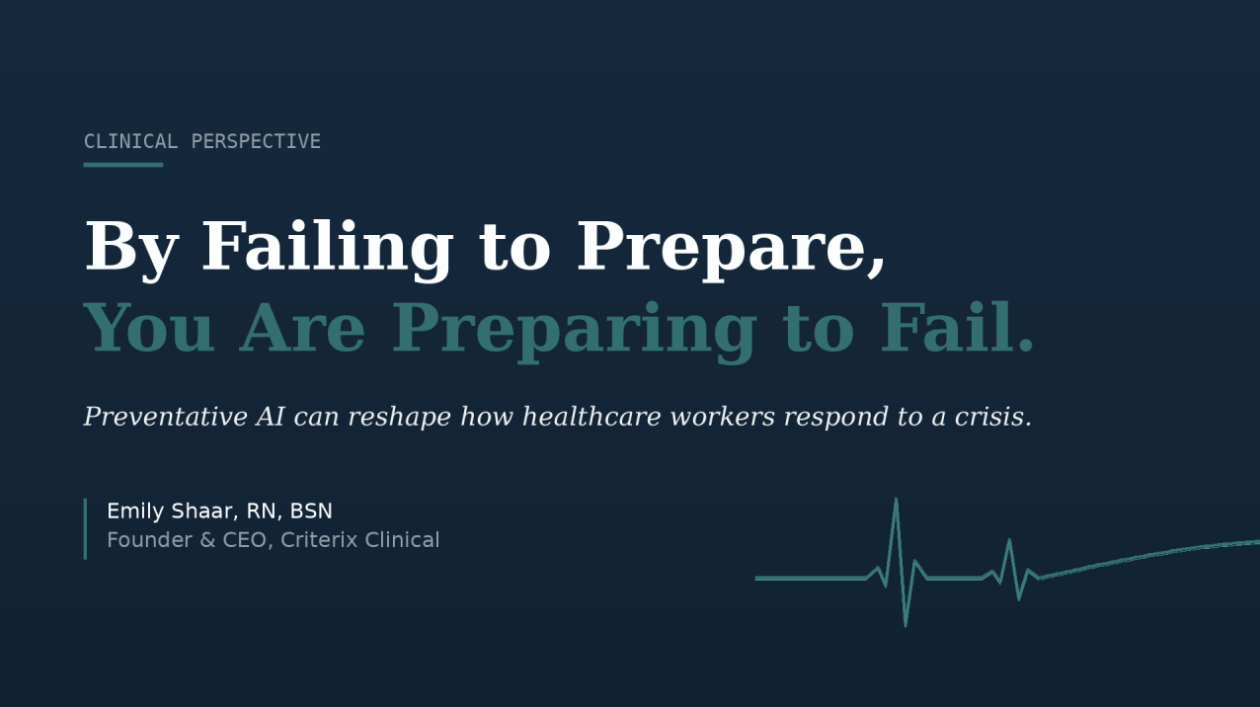
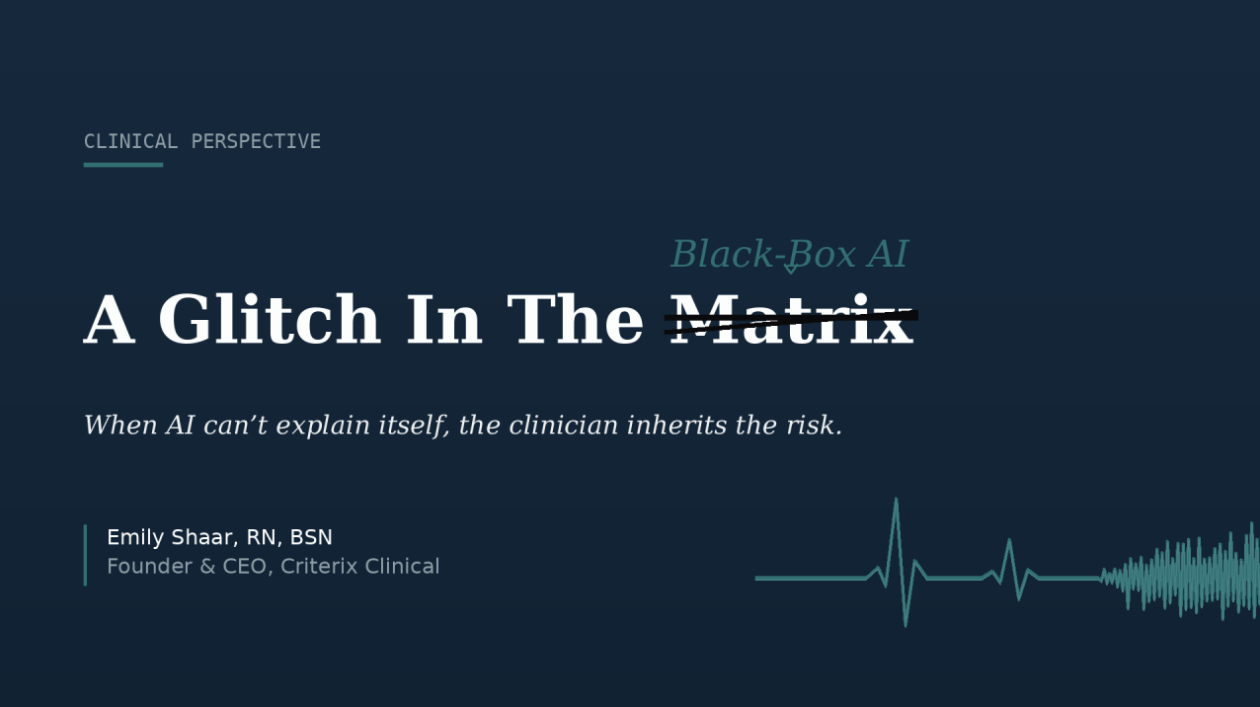
Articles on healthcare AI safety and patient privacy
A series on where AI belongs in patient care, where it does not, and how to protect yourself and your company from privacy breaches and their consequences. Written from the bedside by a clinician who builds both AI and paper clinical support tools, and who has learned to spot and close the gaps that put patients, consumers, and businesses at risk.
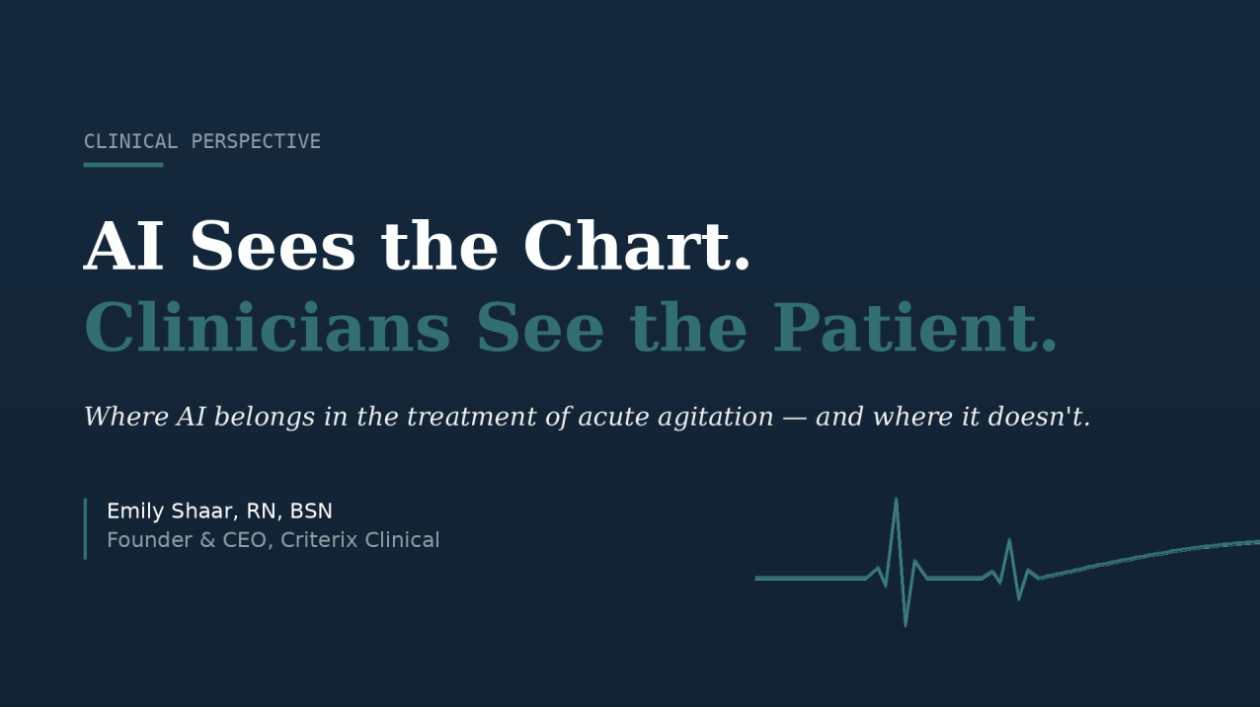
Click Each Cover to Read on LinkedIn ↓


Pilots and partnerships
Criterix is looking for clinical sites, health systems, and partners to pilot its decision-support tool and the What I Take, and Why medication record. Tell me a little about your organization and what you're interested in, and I'll respond within two business days.
Please do not include patient information in this form.